Sustainability at Ceres
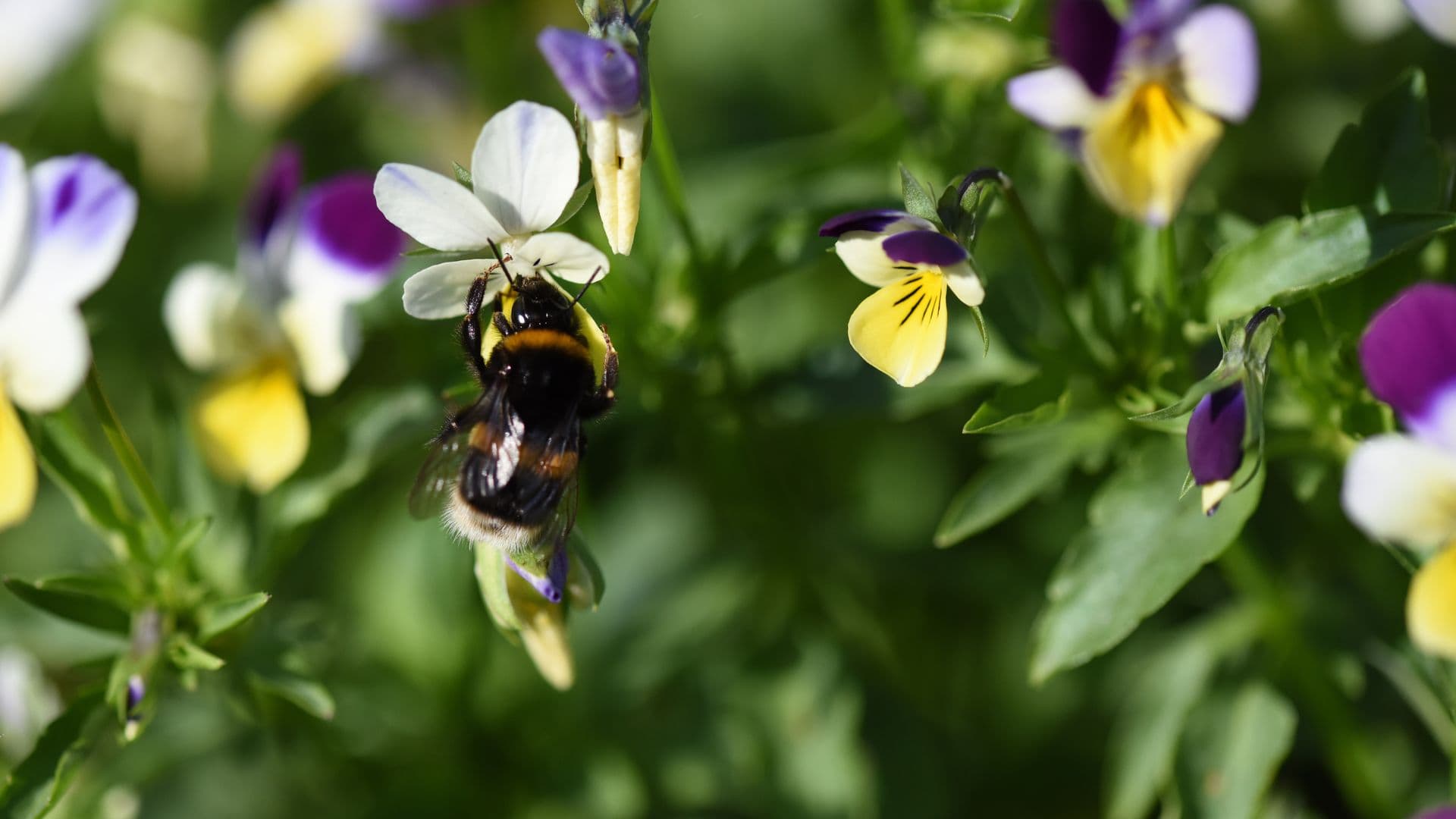
Sustainability is the foundation of work at Ceres. Anyone who wishes to process medicinal plants true to their nature must first preserve them intact — in their natural environment, in their biological diversity, in their relationship to soil, weather and season. What is good for the ecosystems is good for the quality of the preparations. This connection is the starting point at Ceres.
Organic or Demeter cultivation and wild collection
Ceres processes around 10 tonnes of fresh plants annually at the two production sites in Kesswil in the canton of Thurgau and Nax in the canton of Valais. Two-thirds of these come from organic or Demeter cultivation, one-third from controlled wild collection.
The wild collection sites are carefully selected and monitored over the long term. Raphael Stucki, Head of Wild Collection and Quality Control at Ceres and a trained environmental engineer, accompanies the development of every wild collection plant from its natural location through processing to analysis. Wild collection at Ceres means harvesting selectively to protect the populations and preserve the site.
Some medicinal plants are unsuitable for cultivation due to their specific habitat requirements — for example, Ginkgo biloba or Taraxacum officinale. For these, wild collection is not only ecologically justifiable but also qualitatively superior: wild-growing plants develop a richer biochemical spectrum under real ecological conditions than the same plant could achieve in cultivation.
What is meant to help people find harmony and strengthen health itself requires a harmonious and healthy development.
The right harvest time and by hand
All Ceres plants are harvested by hand — selectively, in the morning before the midday heat, at the optimum stage of harvesting. Three convictions lie behind this:
First, quality: The harvest time determines the plant quality. Mechanical harvesting in large quantities cannot determine the optimum time individually for each plant. Handwork allows selective harvesting.
Second, oxidation protection: Mechanical harvesting and processing accelerate the oxidation process, which breaks down valuable phenolic compounds — measurable within the first minutes after harvesting. Slow, careful handwork slows this process and preserves the plant spectrum.
Third, selectivity: Only plants that have reached the optimal stage are harvested. The rest remain standing — in the field, at the wild site, for insects and for the following year.
Organic growth instead of expansion
When Ceres reached capacity limits in Kesswil, the company decided against large-scale expansion of the existing site. Instead, a second site was established in 2012 in Nax in the Valais — organic growth, oriented to natural structures.
Nax offers different climatic conditions than Kesswil: hot, dry summers, cold winters, and a long-standing herbal cultivation tradition in the region. This difference is not a disadvantage — it is a strength. Plants that thrive better at higher altitudes are cultivated or collected wild in Nax and its surroundings. After harvesting, the plants go directly to the production site for further processing.
Less — and consciously so
The production philosophy is not focused on maximum output but on maximum quality: a patented mortar process without heating, multi-year storage in temperature-controlled dark rooms, daily stirring by hand.
Less, done properly, is more. This applies to quality — and to the ecological footprint.
Member of PhytoValley Switzerland
Ceres is a member of the PhytoValley Switzerland network, which connects research, production and knowledge transfer around medicinal plants in Switzerland. This integration into a larger ecological and scientific network corresponds with Ceres’ understanding of sustainability: not as an isolated corporate achievement but as part of a living system.
Ceres does not understand sustainability as a certificate to be acquired, but as an attitude that manifests itself in every decision — from the choice of seed to the length of the maturation period. The conviction behind this: those who respect the earth on which the medicinal plants grow, also respect the people who take them.