Finding Calm — What Patients Experience When Using Passiflora incarnata
Ceres Redaktion · 10 April 2026
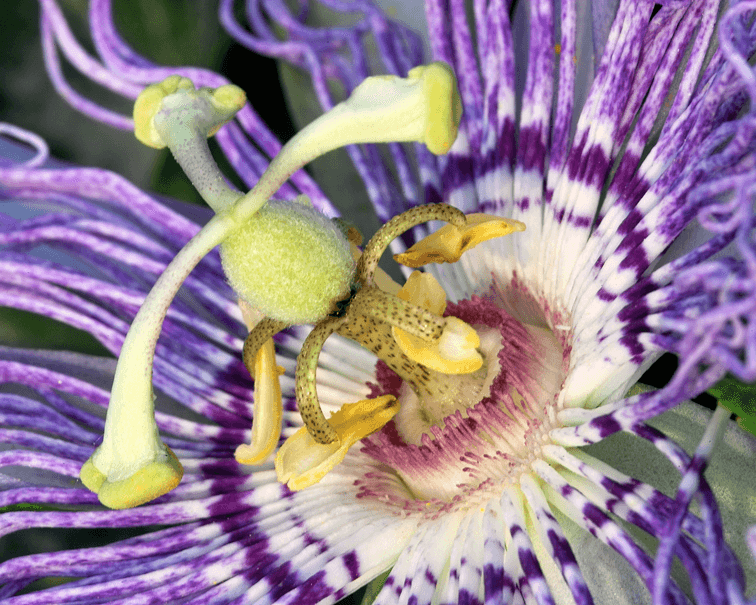
A qualitative study by the University Hospital Zurich does not inquire about averages — but rather what people truly perceive when taking Passiflora incarnata.
Study source: Canella C, Bachmann C, Wolfensberger B, Witt CM. Journal of Ethnopharmacology, 2019
Study design: Qualitative, phenomenological observational study
Published: March 2019 · DOI: 10.1016/j.jep.2018.11.022
Note: Qualitative study — no quantitative efficacy statements
Passiflora incarnata, the passionflower, is one of the few medicinal plants used continuously in Western European phytotherapy since the 19th century — for restlessness, sleep disorders, anxiety. Clinical studies have examined various preparations for their efficacy. What is often missing from these studies is the other half of the story: How do people experience the process of taking it? What do they perceive, how do they interpret it, what changes in their daily lives?
A research group at the Institute of Complementary and Integrative Medicine of the University Hospital Zurich investigated exactly these questions — with an approach that is rare in medicinal plant research: a qualitative, phenomenological study.
Method: Listening instead of measuring
Eight German-speaking patients in Switzerland (aged 48 to 80) participated in the study. All received the Ceres Passiflora incarnata mother tincture — an ethanolic fresh plant extract — prescribed for the first time by physicians specialising in phytotherapy.
The study combined several methods: questionnaires before and after treatment, diaries during intake, as well as in-depth personal interviews. Evaluation was conducted using qualitative content analysis, narrative inquiry, and the documentary method — approaches focused on understanding meaning and experience rather than statistical evaluation.
The explicit aim was not to determine the efficacy of the tincture, but rather what the patients themselves perceived and how they interpreted their experience and integrated it into their biography.
Three types of experience narratives
Three distinct types of biographical narratives emerged from the material:
Type 1 — Realignment
These patients described a transformation: previously highly performance-oriented, they moved during the intake towards a rebalancing of priorities — towards more calm and inner balance. In these accounts, the passionflower accompanied a personal process of change.
Type 2 — Integration
This group maintained their performance orientation but simultaneously described a newly accessible calm — a kind of parallel quality that integrated into daily life without fundamentally changing it.
Type 3 — Persistence
In this group, performance orientation persisted and symptoms continued. A subjective change through the tincture was not described.
The study reveals that patients take the same plant, the same extract, in fundamentally different life situations — and accordingly have different experiences with it.
What this study means
The passionflower study is not an efficacy study. It does not make any statement about whether Passiflora incarnata is clinically effective for anxiety or sleep disorders — that was not its question. Its strength lies elsewhere: it shows that the experience of a medicinal product is deeply anchored in the biography and personal values of the person taking it.
For practice, this means: the context of intake, the attitude of the treating person, the conversation about the plant and its qualities — all this is not ancillary but part of the therapeutic process. This idea is familiar in complementary medicine but is rarely supported so directly by qualitative research.
The study was conducted by researchers at the Institute of Complementary and Integrative Medicine at the University Hospital Zurich and the University of Zurich. Christoph Bachmann has worked as a freelance pharmaceutical consultant for Ceres Heilmittel AG and contributed his pharmacological knowledge of Passiflora incarnata to the study. Additional funding was provided by Ceres Heilmittel AG. This information is disclosed in the publication.
It is remarkable that this study is cited in the Hypericum study of 2025 as a methodological reference example for qualitative research with Ceres mother tinctures — both belong to a growing body of work that deliberately broadens the spectrum of methods in medicinal plant research.
About the plant
Passiflora incarnata was established as a medicinal plant in Europe in the mid-19th century and is today listed in the Swiss Pharmacopoeia. In Switzerland, various preparations are approved — including ethanolic extracts like the Ceres mother tincture. The plant is traditionally used in Western European phytotherapy for nervous restlessness, difficulties falling asleep, and anxiety disorders.
Original article
Canella C, Bachmann C, Wolfensberger B, Witt CM. Patients' experiences attributed to the use of Passiflora incarnata: A qualitative, phenomenological study. J Ethnopharmacol. 2019;231:295-301. DOI: 10.1016/j.jep.2018.11.022
Continue on Ceres channels
These links open the respective platforms directly. They are intended as a supplement to the article, not as a native in-page interaction.