Marigold in Everyday Life
Miriam Moser · 18 August 2026
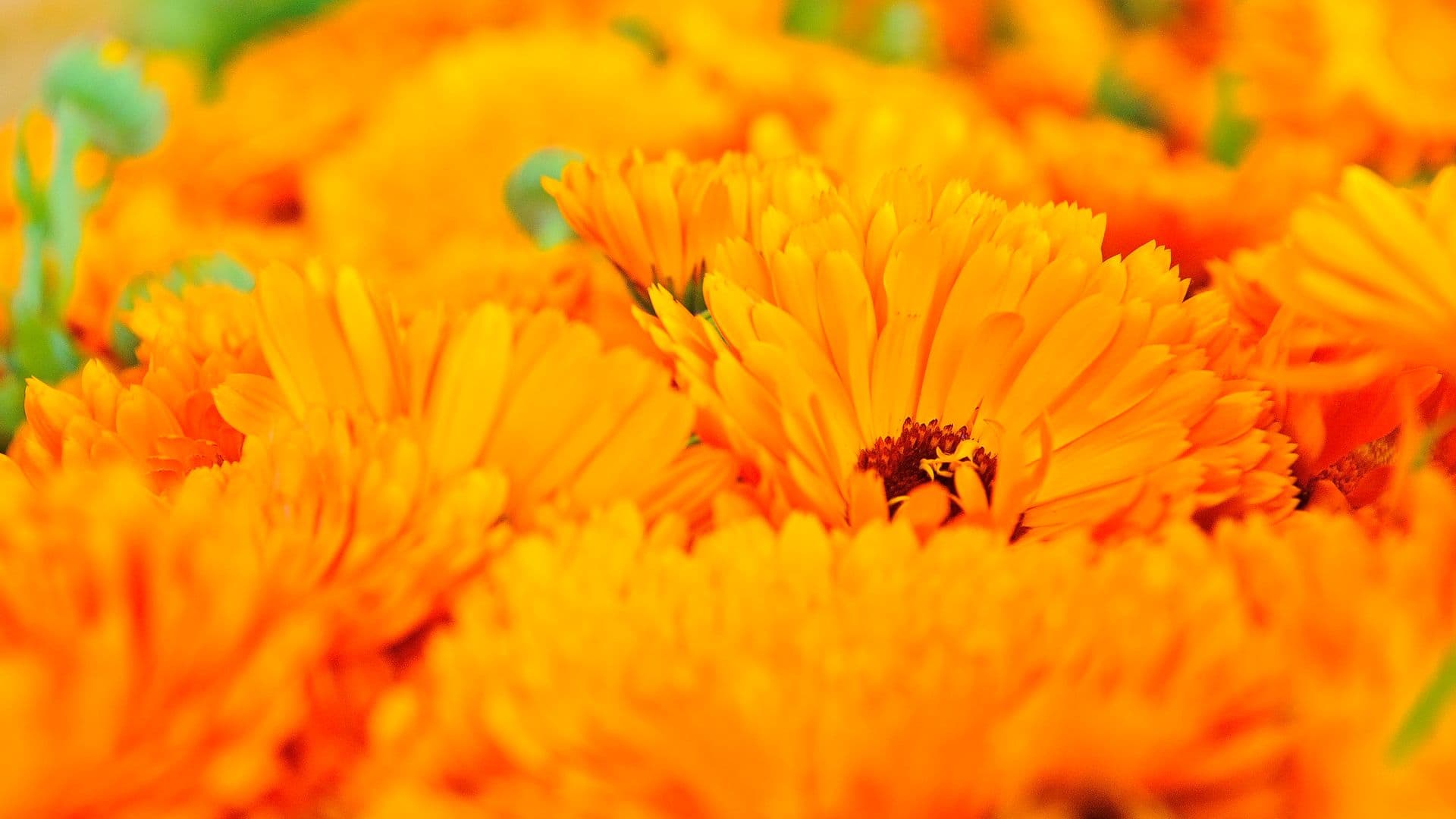
The marigold (Calendula officinalis) is a radiant companion of humanity: which customs are associated with its flowers? How was it used in the past – and what traces has it left in the garden, kitchen, and medicinal plant studies?
Calendula has been cultivated and used for centuries. Its striking flowers made it a familiar garden plant, while it has also found use in cooking, dyeing, and traditional herbal medicine. Its history tells of a plant that has accompanied people in many different ways.
A Plant Full of Stories
Calendula carries numerous traditional names. Terms like gold flower, gold rose, rain flower or sun bride refer to its bright colour, flower shape, or daily behaviour. The genus name Calendula is traditionally linked to the Latin word calendae meaning the first day of the month. However, the exact origin of the name remains unclear.
Its relationship with light has shaped the perception of the plant over a long period. The flowers open in daylight and often close when it gets darker. Such observations gave rise to weather lore: closed flowers in the morning were regarded as signs of impending rain. These traditions tell less about actual weather forecasting and more about earlier generations’ careful observation of the plant world.
Companion in the Garden
Calendula likely originates from the western Mediterranean and has long been cultivated as a garden plant. Today, it is widespread in many parts of the world. Its modest requirements and long flowering period have contributed to making it a familiar garden plant.
More than a Flower
Calendulas are especially closely associated with monastery, herb, and cottage gardens. There, they were valued not only for their bright flowers but also as traditional domestic medicinal plants. Their seeds are variously shaped and partly noticeably curved – a distinctive feature reflected also in the German name “Ringelblume”.
With its long flowering period, Calendula is also a valuable plant for numerous insects. As a robust and undemanding garden plant, it is widely used – for example, in mixed cultures, as green manure, or as a component of compost.
Golden Flowers for the Kitchen
Calendula also has a long tradition in the kitchen. Its petals are edible and were used to colour and flavour various dishes because of their intense colour. Its use as a dye for butter, soups, rice, or cheese is especially well known. In the English-speaking world, the plant is therefore also called “pot marigold” – a nod to its culinary use.
Calendula was also used as a substitute for the much more precious saffron. This is the origin of the historical term “poor man's saffron.” This referred primarily to the golden-yellow colour, not to a taste-equivalent alternative to true saffron.
Between Tradition and Medicinal Plant
Calendula’s medicinal history in Europe goes back at least to the Middle Ages. An early clear mention is found with Hildegard von Bingen from the 12th century. She referred to the plant as “Ringele”. What is particularly interesting is what Hildegard did not pass down: Contrary to some later portrayals, she did not attribute a particularly broad range of applications to Calendula. For her, the plant was mainly mentioned in connection with ailments following the consumption of unsuitable or spoiled food.
In later centuries, the spectrum of traditional uses expanded considerably. Historical sources include use for skin injuries and inflammations. Today’s European assessment builds on this long tradition: The European Medicines Agency recognises Calendula flowers as a traditional herbal medicinal product for the treatment of minor skin inflammations and small wounds, as well as certain mild inflammations in the mouth and throat. The classification is explicitly based on long-standing traditional use, not evidence from modern clinical studies.
Calendula at Ceres
For Calendula, the flowering herb is harvested at the optimal stage of bloom. Buds and some fruiting bodies are also present on the plants. Before harvesting, it is important that the plants have had full sun for several days. Only then does the plant develop its characteristic stickiness – the secreted resin – which is one of its signature features. The plant then smells warm and resinous and sticks to the skin during picking.
More about plant processing at Ceres: The 4 Pillars of Ceres Quality.
Continue on Ceres channels
These links open the respective platforms directly. They are intended as a supplement to the article, not as a native in-page interaction.