Peppermint
Mentha piperita
Neutralisation of individuality, refreshment, relaxation
Botany
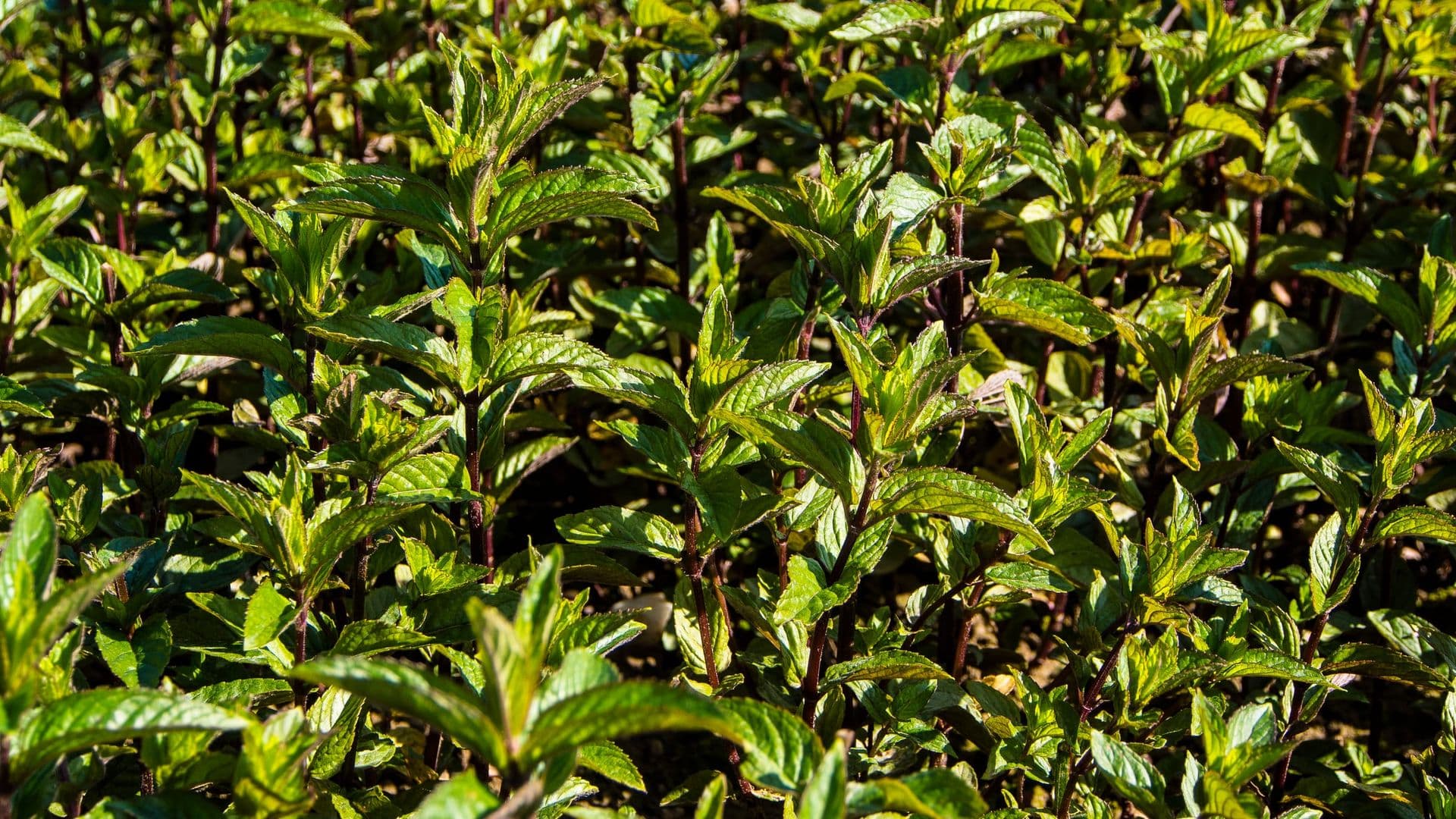
Mentha piperita L., peppermint, belongs to the family of Lamiaceae (Labiatae). It is believed to have originated spontaneously in England from the mint species Mentha spicata and Mentha aquatica, and was first mentioned in 1696. Today, the species is cultivated on a large scale throughout the world. It is deciduous, so its above-ground parts die back in autumn and regrow in spring. It readily produces underground runners, which are used for propagation in cultivation. When propagated from seed, there is a segregation that results in fewer valuable mints being produced. Its stems are square-shaped, often tinged reddish, and under favourable conditions can grow up to 80 cm tall. The leaves, which range from elongated-ovate to elongated-lanceolate, are arranged oppositely in a cross pattern on the plant. With the naked eye, one can already see a large number of oil glands on the underside of the leaves, which store the essential oil with its fresh, cooling and relaxing scent. From July through August, the plants flower with small lilac flowers, which are gathered into spike-like inflorescences in false whorls at the tips of the shoots.
Essence of the plant
Neutralisation of individuality, refreshment, relaxation
The clarifying breath
Peppermint is the plant of clarity and boundary-setting. Its menthol principle — the paradoxical simultaneity of coolness and warmth — corresponds to the ability to distinguish states, draw boundaries, and bring order to the unclear. The peppermint type is diligent, inventive and mentally active — but tends to overheat and become tense. The plant relieves cramps, clears the head, promotes digestive processes and mediates between warmth and cold. It creates space — both in the body and in the mind.
Mentha piperita
Peppermint
From shape to healing power
The menthol paradox is the core signature of peppermint: a substance that acts both cooling and warming, numbing and invigorating — a symbol of the ability to mediate opposites and set boundaries. Its spread through stolons — tenacious, far-reaching, almost unstoppable — stands for assertiveness and persistence. The intense, immediately penetrating scent upon crushing symbolises instant clarity and the power of boundary-setting.
Demeter cultivation
Peppermint is always cultivated; it does not occur in the wild. The main cultivation areas for the drug are Germany (Thuringia, Bavaria), Bulgaria, Egypt, and the USA. In Switzerland, it is grown in gardens and occasionally commercially.
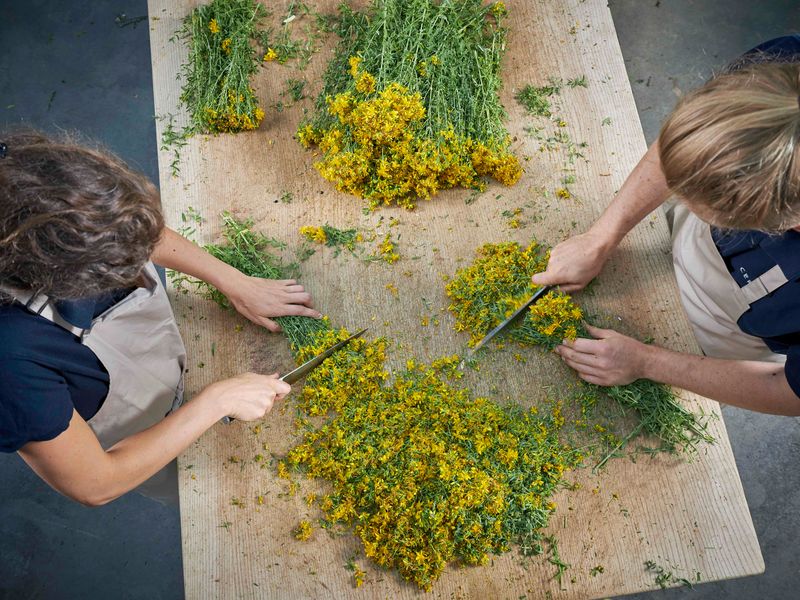
Ceres uses fresh peppermint leaves from Demeter cultivation in Switzerland. The leaves are harvested by hand just before flowering — when the active ingredient content is at its highest.
Traditional Use
Peppermint has long been valued as a medicinal and spice plant. It is commonly used for gastrointestinal complaints, as a calming agent, and for colds. The plant is attributed with antispasmodic, carminative, and choleretic effects. The sharp-fresh and stimulating aroma plays a central role in peppermint. Similar to bitter substances, peppermint oil has not only direct calming effects but also reflexive secretion promotion. Peppermint oil, obtained from the fresh flowering aerial parts of Mentha piperita L., is also often applied externally in diluted form to the temples for the treatment of migraine and tension headaches. Furthermore, it is included in a variety of products for flavouring. The commercially available mint oil is considerably more affordable and is derived from corn mint.
Sources
1. Hänsel, R. & Steinegger, E. Hänsel / Sticher Pharmakognosie Phytopharmazie. (Wissenschaftliche Verlagsgesellschaft GmbH, Stuttgart, Deutschland, 2015).
2. Madaus, G. MADAUS LEHRBUCH DER BIOLOGISCHEN HEILMITTEL BAND 1-11. (mediamed Verlag, Ravensburg, 1990).
3. Committee on Herbal Medicinal Products (HMPC). European Union herbal monograph on Mentha x piperita L., aetheroleum. EMA/ HMPC/522410/2013 (2020).
4. Committee on Herbal Medicinal Products (HMPC). European Union herbal monograph on Mentha x piperita L., folium. EMA/HMPC/572705/2014 (2020).
5. BGA/BfArM (Kommission D). Mentha piperita. Bundesanzeiger 172 a, (1988).
6. Kalbermatten, R. & Kalbermatten, H. Pflanzliche Urtinkturen. (AT Verlag, Aarau, Schweiz, 2018).
Ceres mortar process — gentle, cold and complete.
Freshly harvested, hand-picked, ground at room temperature and aged for years. No heating, no pressure - the plant's full vitality is preserved.