Lemon balm
Melissa officinalis
Soothing, softness, mildness
Botany
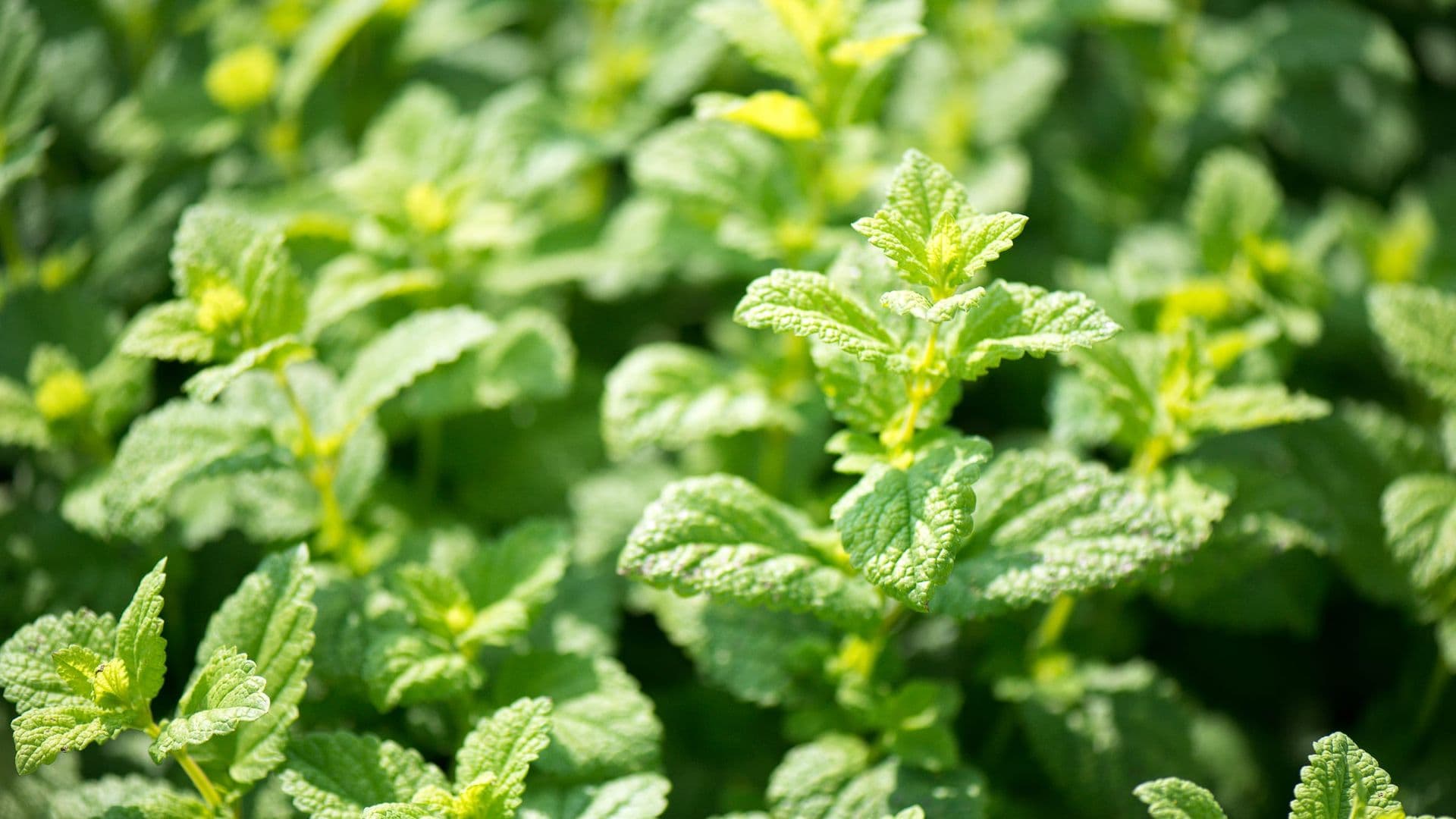
Lemon balm (Melissa officinalis L.) is a plant from the family Lamiaceae (mint family). Its family affiliation is recognised by the wonderful, intensely lemony scent it releases when gently touched. It originates from the Mediterranean region or Western Asia and was brought to Central Europe by the Benedictine monks. It grows up to 80 cm tall; its square, tough stem carries egg- to heart-shaped, opposite leaves with serrated edges. The strong leaf veins are deeply sunken on the upper side and prominent beneath.
The leaves bear small glands, and glandular hairs are found on the stem, which release a strong, harmonious lemon scent when crushed. Even a light stroke releases the volatile fragrance. From the yellow buds in the leaf axils, inconspicuous white or pale violet flowers develop from June to August – distinctly divided into upper and lower lips. The frost-sensitive lemon balm grows particularly well in warm, sunny, nutrient-rich locations.
Essence of the plant
Soothing, softness, mildness
Lemon balm could be described as the essence derived from the sum of many medicinal plants. The individuality that characterises a particular medicinal plant, and which is actually desired in therapy, is largely absent in lemon balm. What remains is an incredibly gentle, all-healing nature.
Lemon balm is a medicinal plant that fills us with deep gratitude and calm. Its essence corresponds to a gentle, caressing touch; it imparts relaxed calm when nervousness and tension lead to digestive disorders or heart complaints. Lemon balm belongs to the person who, like the “Princess and the Pea”, perceives even the smallest discomforts of life as hard and disturbing.
A great need for harmony characterises this person. They love all that is beautiful, delicate, balanced, and lovely.
Even slight ailments cloud their sense of well-being, and they require a lot of care. Lemon balm turns to them, symbolising the principle of help. Difficulties in falling asleep, digestive problems, nervous restlessness and mild heart complaints – where the need for harmony is disturbed – are successfully treated with lemon balm.
Melissa officinalis
Lemon balm
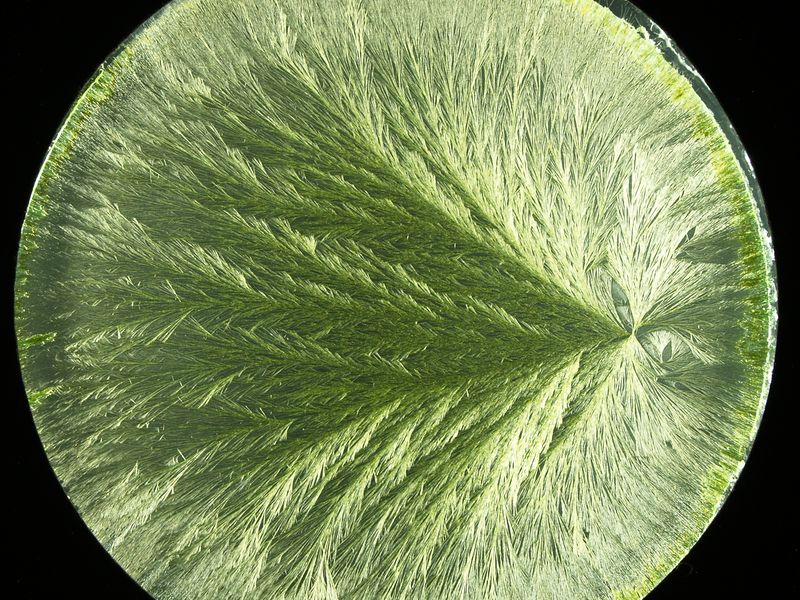
From shape to healing power
Lemon balm is one of the most valued medicinal plants. It has a completely mild, gentle mode of action and is never aggressive. It can be taken without any problems – even over a long period – and benefits everyone at some time. Its leaves spread out horizontally; it is part of its essence to gently cover something beneath.
A number of lemon balm plants in the garden gradually form an arch. The leaves also consist of many small arches, spanning the dense network of prominent veins. These are gentle arches, like a hand stroking hair and the face of a loved one in a tender motion. Lemon balm does not show a pointed striving upwards, with the development of tension between bottom and top.
No, it seems suspended freely between heaven and earth. Lemon balm has withdrawn from earthly forces more than any other plant. Between the strong leaf veins, small arches span out.
When we brush a dense lemon balm stand with the back of the hand, a sensation and a sound arise, somewhat reminiscent of dry-skinned leaves. The texture of the plant has something robust that one would not expect at first. I was repeatedly surprised by the firmness of fresh lemon balm when processing it. Intuitively, one perceives the plant as soft and delicate, then is astonished by the toughness of its leaves.
Upon closer examination, it becomes clear that the essence of lightness and delicacy has not penetrated into the substance. Indeed, it is precisely the firmness of the structure that enables lemon balm to express this supportive and suspended quality. When we stroke fresh lemon balm with the hand, a subtle, lovely lemon-like scent unfolds. The content of this fragrant essential oil is very low.
Essential lemon balm oil is priceless due to the large amount of plant material required for its extraction. What is marketed as “lemon balm oil” is mostly derived from similarly scented Indian citronella grass. The essential oil of lemon balm is very volatile and unstable.
Half a year after harvest, up to 60% of the content is already lost. Lemon balm tea over a year old practically has no lemon aroma left, and after two years it is flavourless. Quite different is a tincture made from fresh lemon balm using a nature-preserving procedure. For a certain time, the lemon-like scent remains, but later, after several years of maturation, a wonderfully supportive fragrance develops.
Anyone who has had the opportunity to visit warehouses of various large drug importers will have noticed that they all smell very similarly. This refers to a scent where no single strongly scented drug dominates. The sum of many medicinal plants produces a wonderfully supportive scent. This is exactly how a mature, essence-rich lemon balm mother tincture smells.
Organic and Demeter cultivation
Lemon balm originates from the eastern Mediterranean region and Western Asia and has been cultivated worldwide for centuries. In temperate climates, it has naturalised from gardens. It prefers sunny to partly shaded, nutrient-rich soils.
Ceres uses lemon balm from organic or Demeter-certified cultivation in Switzerland. The leaves are harvested before the flowering period — when the essential oil content is highest. The harvest is carried out by hand.
Traditional Use
Melissa officinalis L. is a spice and medicinal plant originating from the Orient with a long tradition. Similar to lavender, melissa is used to strengthen the nerves, calm, relieve spasms, and as a carminative to treat mild digestive disorders. In folk medicine and homeopathy, melissa is also used for menstrual irregularities. Furthermore, the antiviral effect of melissa on herpes labialis is well known and has been studied. Dried melissa leaves are a very popular component of tea mixtures. However, the fresh lemon-like floral scent is most pronounced only in the fresh plant and can fade in the dried herb over time, as the content of essential oil is rather low. True melissa oil, along with rose oil, is among the most expensive essential oils, and the products available are often dilutions in carrier oil or solutions of other essential oils (e.g. citronellal / lemongrass). “Melissengeist” is a distillate made from melissa leaves and other plants.
Sources
1. Hänsel, R. & Steinegger, E. Hänsel / Sticher Pharmakognosie Phytopharmazie. (Wissenschaftliche Verlagsgesellschaft GmbH, Stuttgart, Deutschland, 2015).
2. Monographie BGA/BfArM (Kommission E). Melissae folium (Melissenblätter). Bundesanzeiger 228, (1984).
3. Madaus, G. MADAUS LEHRBUCH DER BIOLOGISCHEN HEILMITTEL BAND 1-11. (mediamed Verlag, Ravensburg, 1990).
4. BGA/BfArM (Kommission D). Melissa officinalis. Bundesanzeiger 172 a, (1988).
5. Kalbermatten, R. & Kalbermatten, H. Pflanzliche Urtinkturen. (AT Verlag, Aarau, Schweiz, 2018).
6. Kalbermatten, R. Wesen und Signatur der Heilpflanzen. (AT Verlag, Aarau, Schweiz, 2016).
Ceres mortar process — gentle, cold and complete.
Freshly harvested, hand-picked, ground at room temperature and aged for years. No heating, no pressure - the plant's full vitality is preserved.